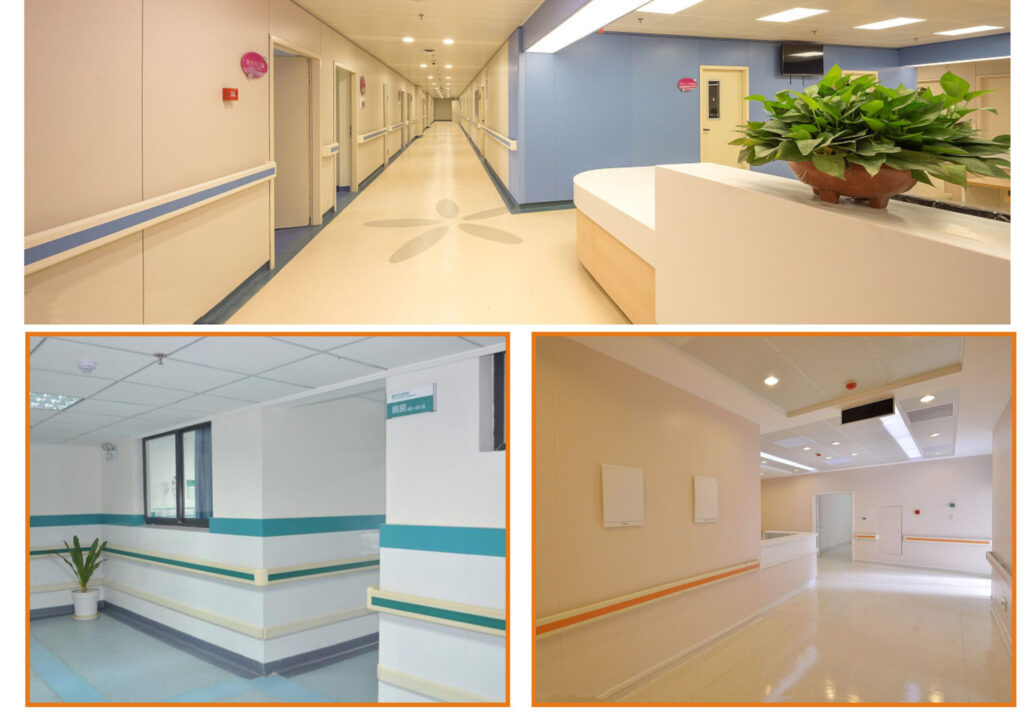
Medical crash handrails (also known as medical guardrails or wall protection rails) are ubiquitous in hospitals, clinics, and nursing homes. But they are far more than just simple strips on the wall. They are a critical component of patient and staff safety, environmental protection, and dignified care. Here’s why their use is non-negotiable in healthcare settings:
-
Superior Protection Against Impacts:
-
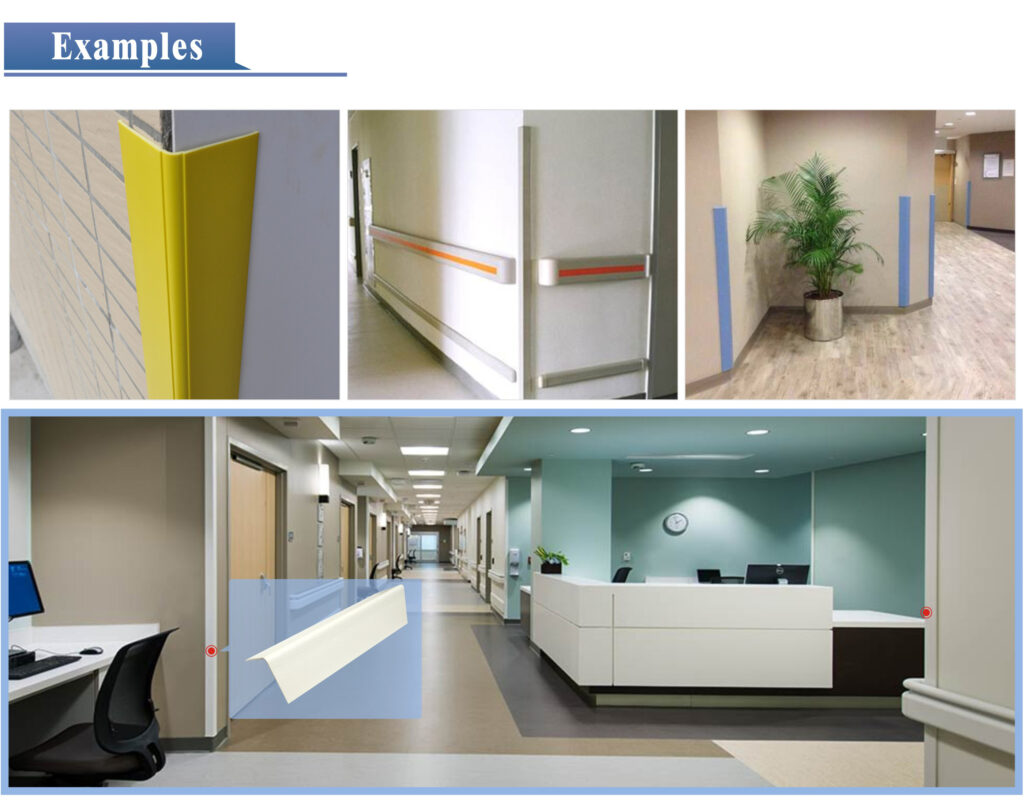
Safeguarding People: High-traffic corridors and areas frequented by individuals with mobility challenges are prone to collisions. Crash handrails absorb and distribute impact forces, significantly reducing the risk of injury to patients, visitors, and staff from bumps with walls or medical equipment like beds, wheelchairs, or medication carts .
-
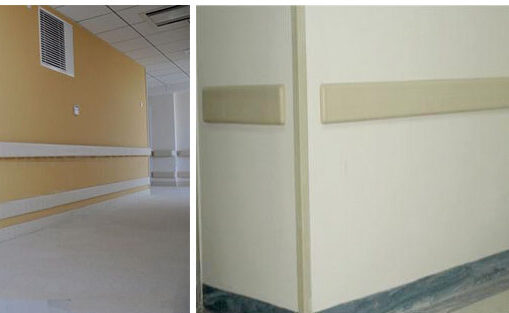
Protecting Infrastructure: Walls are vulnerable to damage from constant knocks by stretchers, beds, or cleaning equipment. Handrails act as a durable shield, preventing unsightly dents, cracks, and costly repairs, maintaining a professional environment .
-
-
Vital Support & Fall Prevention:
-
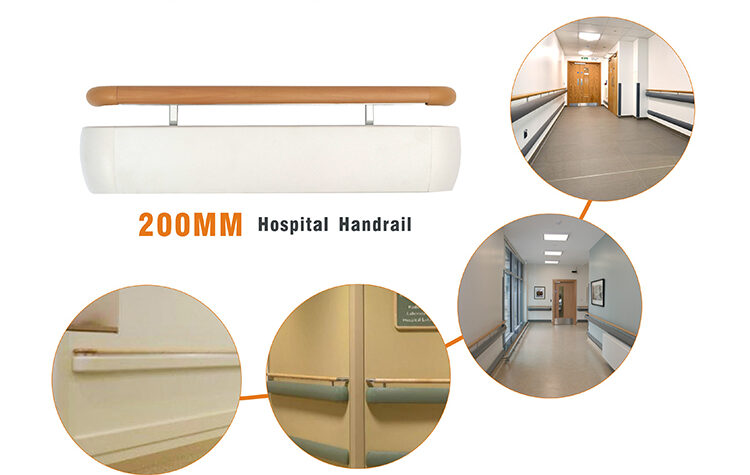
For the elderly, patients recovering from surgery, those with balance issues, or individuals with conditions like arthritis, simply walking can be a challenge. Medical handrails provide a sturdy, continuous grip, offering crucial support when standing, walking, or transitioning between positions (e.g., sitting to standing) .
-
Falls are a leading cause of serious injury (like fractures) and morbidity, especially among seniors. Providing reliable support rails significantly lowers this risk, promoting patient confidence and independence during movement .
-
-
Hygienic & Safe Materials:
-
Made primarily from specialized PVC or similar polymers, medical-grade handrails boast inherent antibacterial properties. This is paramount in infection control, helping to prevent the spread of pathogens in sensitive environments .
-
These materials are also fire-retardant, adding a layer of fire safety, and easy to clean and disinfect regularly – a fundamental requirement for meeting strict hospital hygiene standards .
-
-
Ergonomic & Accessible Design:
-
Properly installed medical handrails adhere to ergonomic principles. Their height, diameter, and placement are designed for comfortable and effective use by a wide range of users .
-
Continuous installation and options for installation on both sides of corridors ensure users always have support within reach, accommodating different needs and dominant hands .
-
-
Beyond Hospitals: Universal Applications:
The benefits extend far beyond acute hospitals. Medical crash handrails are indispensable in:-
Nursing Homes / Assisted Living: Where fall risks among residents are high, providing support in bedrooms, hallways, and crucially, bathrooms and showers .
-
Rehabilitation Centers: Aiding patients in regaining mobility and confidence .
-
Public Restrooms (Healthcare & Beyond): Offering stability on potentially wet floors .
-
Accessible Homes: Enabling safer aging in place .
-
Conclusion:
Medical crash handrails are not merely an accessory; they are a fundamental safety and accessibility feature. By preventing injuries, protecting property, enabling mobility, and upholding hygiene, they create safer, more supportive, and dignified environments for everyone within healthcare facilities and other care settings. Investing in high-quality handrails is an investment in well-being and risk mitigation.
If you have any inquiries, you can contact us via the phone number or email provided above, or leave your phone number or email, and we will reach out to you.